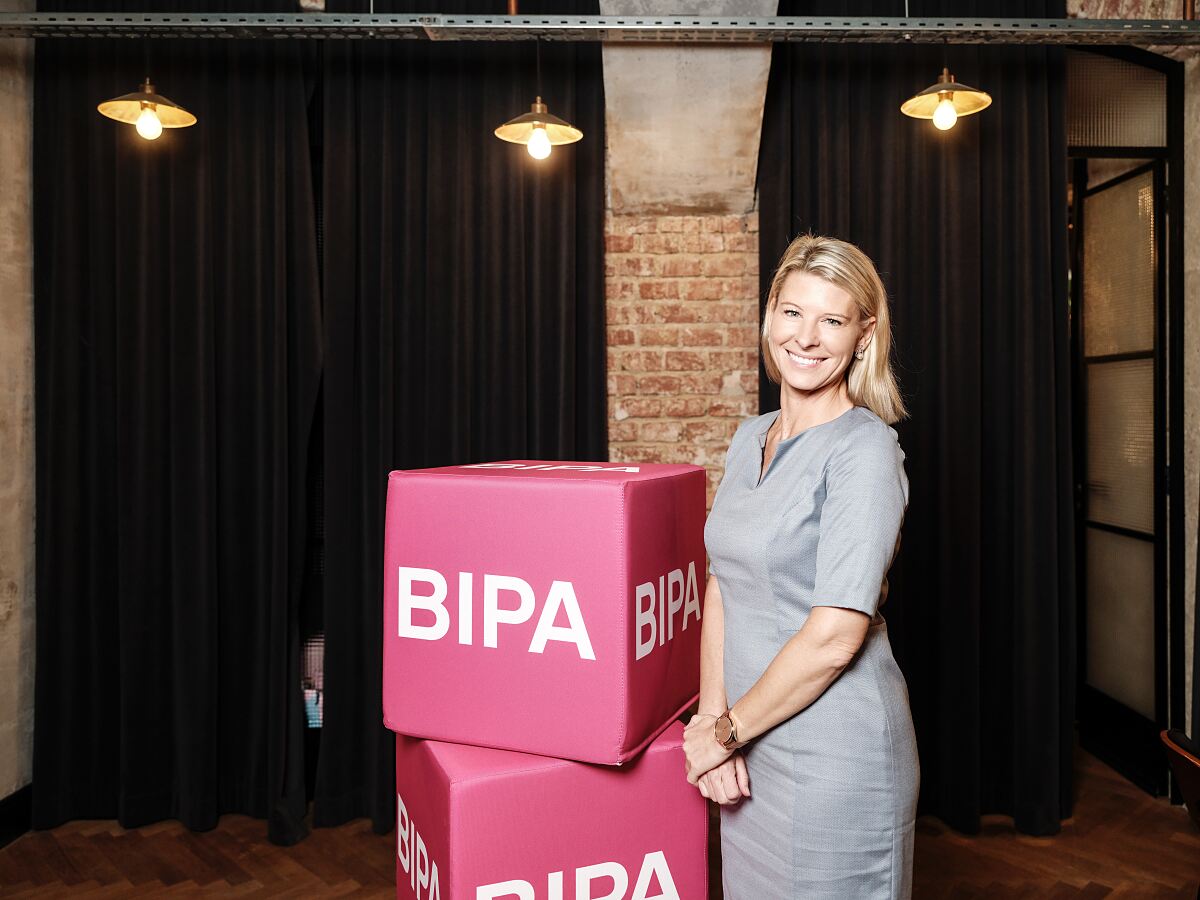
The lack of education is evident among the families surveyed: almost a quarter of parents have not yet talked to their own children about menstruation and do not plan to do so in the future. This group includes more men than women. They say they leave it to their partners to educate their children or see no need to do so with their sons. Daniela Reumann, managing director of BIPA, knows what the consequences of this are: "Men who buy period products often stand helplessly in front of the shelf. They find shopping unpleasant – they don't know which product is the right one or what the size specifications mean. Our store employees are happy to advise them, but I am convinced that men also need more knowledge about menstruation. We must finally break out of the taboo zone – periods are no reason for shame." However, Daniela Reumann knows that this shame does not only affect men. Young girls and women in particular want to hide the products away in their bags.
Sex education remains a women's issue – fathers do not feel ready
Women feel significantly better informed about menstruation. 83 percent say they feel ready to talk to their children about it, compared to only 51 percent of men. The paradox is that men themselves are calling for more male involvement. 72 percent agree completely or strongly that fathers should also play an active role in sex education, just as many agree that boys should also be talked to about it, and 62 percent agree that men and boys should also be aware of details such as the different menstrual products available. What is the reason for this gap? The survey results show that parents usually talk to their children (aged 9-14) about periods spontaneously – two-thirds (60%) when the child asks specific questions or casually in everyday life. Only 40% use information materials such as brochures, and one-third use books or videos. Sex education is therefore based primarily on personal experience – which fathers naturally lack.
There are also regional differences: while eight out of ten parents in Burgenland feel prepared for the conversation, only one in two in Salzburg do. Tyroleans talk to their children most often (73%), while Lower Austria has the lowest rate at only 50%.
Generational conflict: Young people demand sex education for boys too
81 percent of 18-25 year olds believe that the male half of the population should also know about details such as the various period products and the cycle; only 59 percent of 46-55 year olds share this opinion. In this age group, a third of parents have not talked to their children about menstruation. Basically, the vast majority (74%) agree that menstruation should be discussed with both girls and boys – the agreement among younger people is significantly more pronounced. The agreement is particularly high in Burgenland (82%), whereas in Vorarlberg significantly fewer people share this view (62%).
Shame remains – but awareness grows
Eight out of ten people in Austria are reluctant to talk about menstruation – which is worrying when you consider that half the population is affected by it. There are no significant differences between men and women – the taboo affects all age groups. However, awareness is growing when it comes to education: two-thirds (68%) believe that periods should be linked to the topics of sex and contraception. Psychological aspects such as PMS should be given greater consideration in public discussion (79% of women, 62% of men), and 80% would like to see age-appropriate offerings such as workshops, brochures or webinars.
At school, the topic should go beyond biology lessons: four out of ten would like menstruation to be addressed in other school subjects as well – with a focus on breaking down taboos, reducing shame and promoting mutual understanding for all genders.
‘Red box’ to combat period poverty
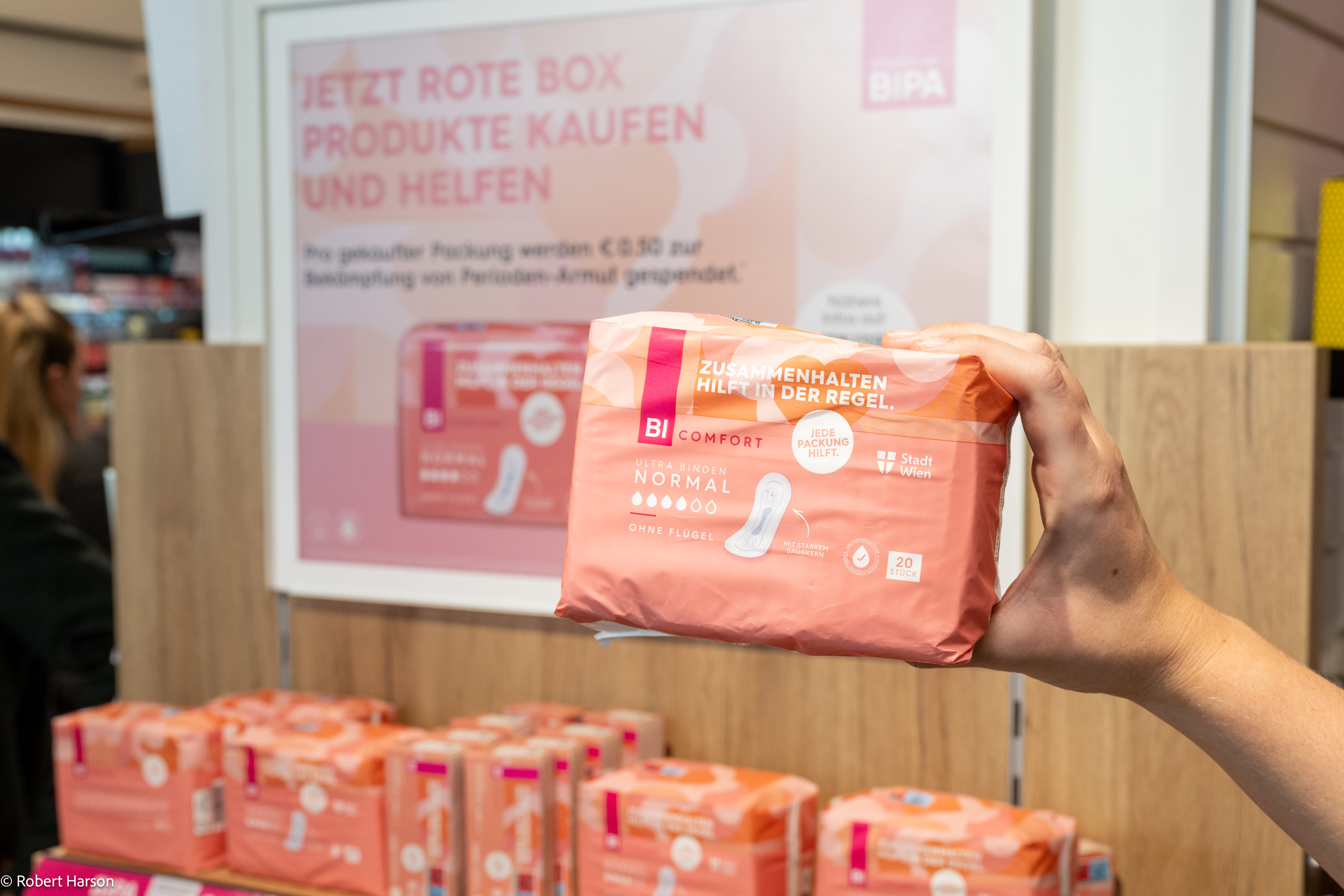
The ‘Red Box’ project run by the City of Vienna and BIPA shows that menstruation is also a social issue. For two years now, women and girls in difficult financial situations have been able to pick up vouchers free of charge and exchange them at BIPA for BI COMFORT brand period products. From an initial 84 distribution points, the network has now grown to 393 locations. More than 25,000 voucher booklets have already been issued per quarter this year – a total of 11 per cent more free BI COMFORT period products were collected from BIPA stores than in the previous year. "The figures prove that the Red Box is effective and provides noticeable relief for many women and girls. No one should have to worry about whether they can afford sanitary towels or tampons. In addition, education is a major concern for us at BIPA. As part of our “Ehrlich gesagt” (‘Honestly speaking’) initiative, we offered webinars for parents and teachers for the first time this year. Due to the high level of interest, we will continue to offer these webinars next year,” says Daniela Reumann.
* A total of 1,006 people in Austria aged between 16 and 75 were surveyed in September 2025. The survey is representative of the Austrian population.