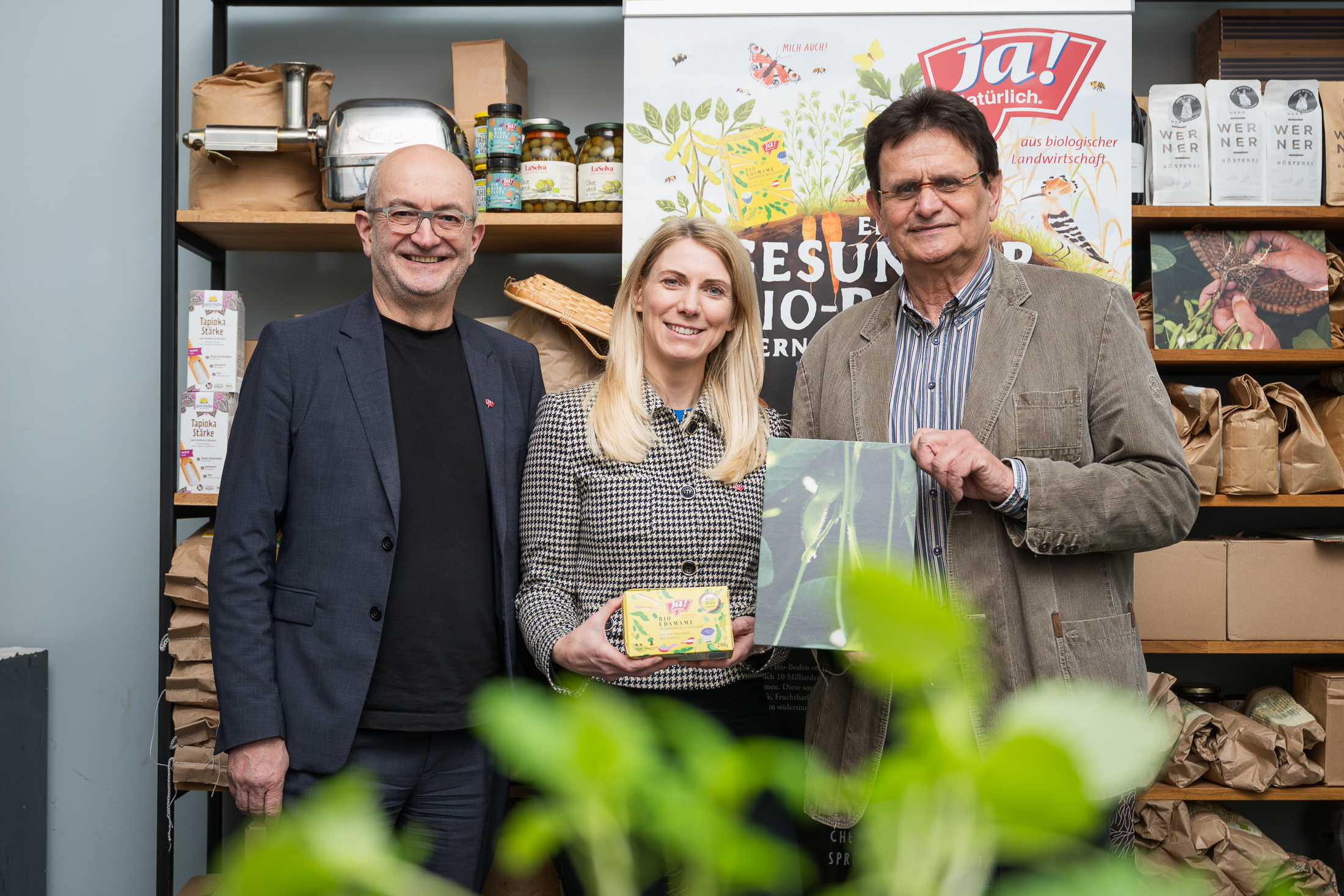
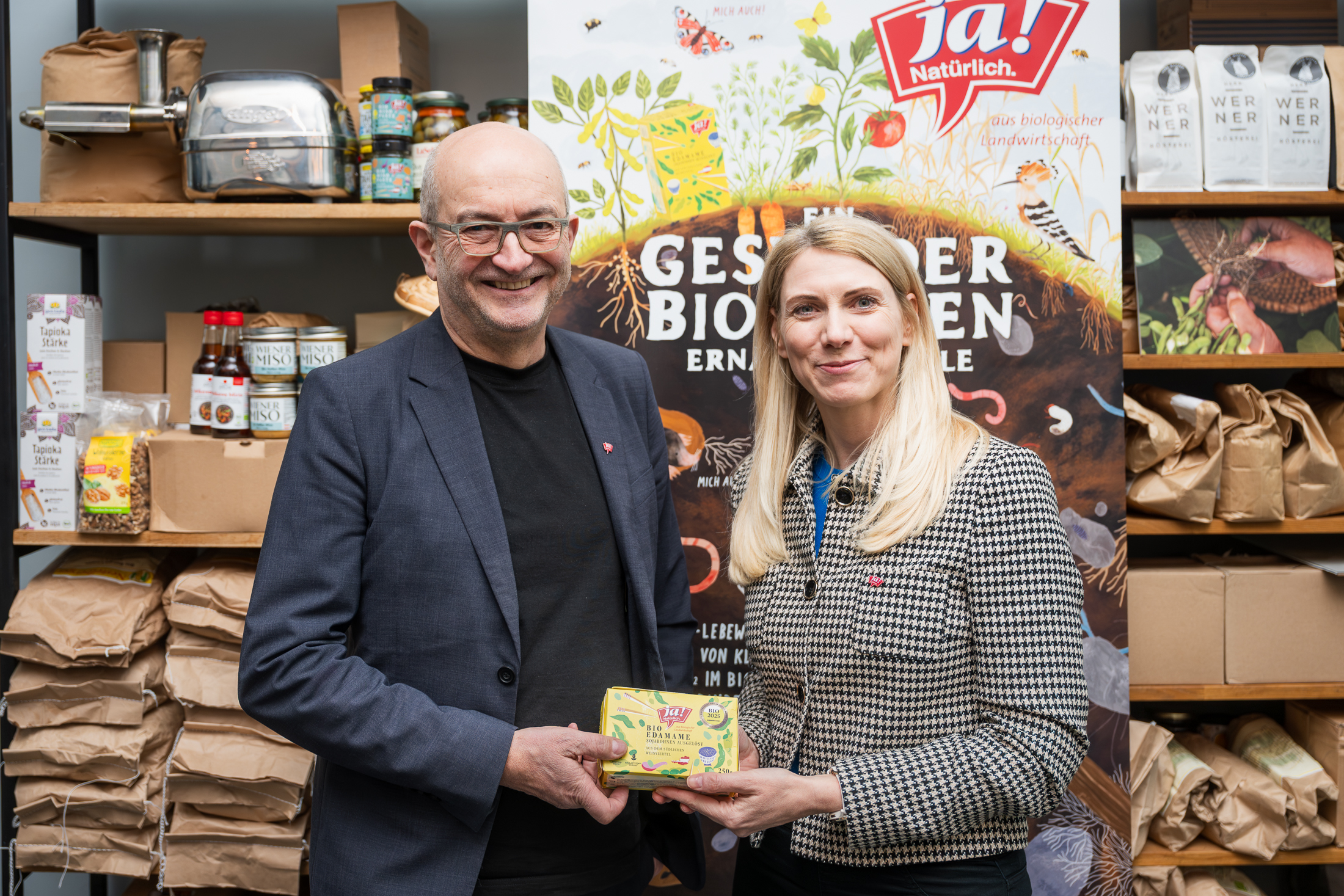
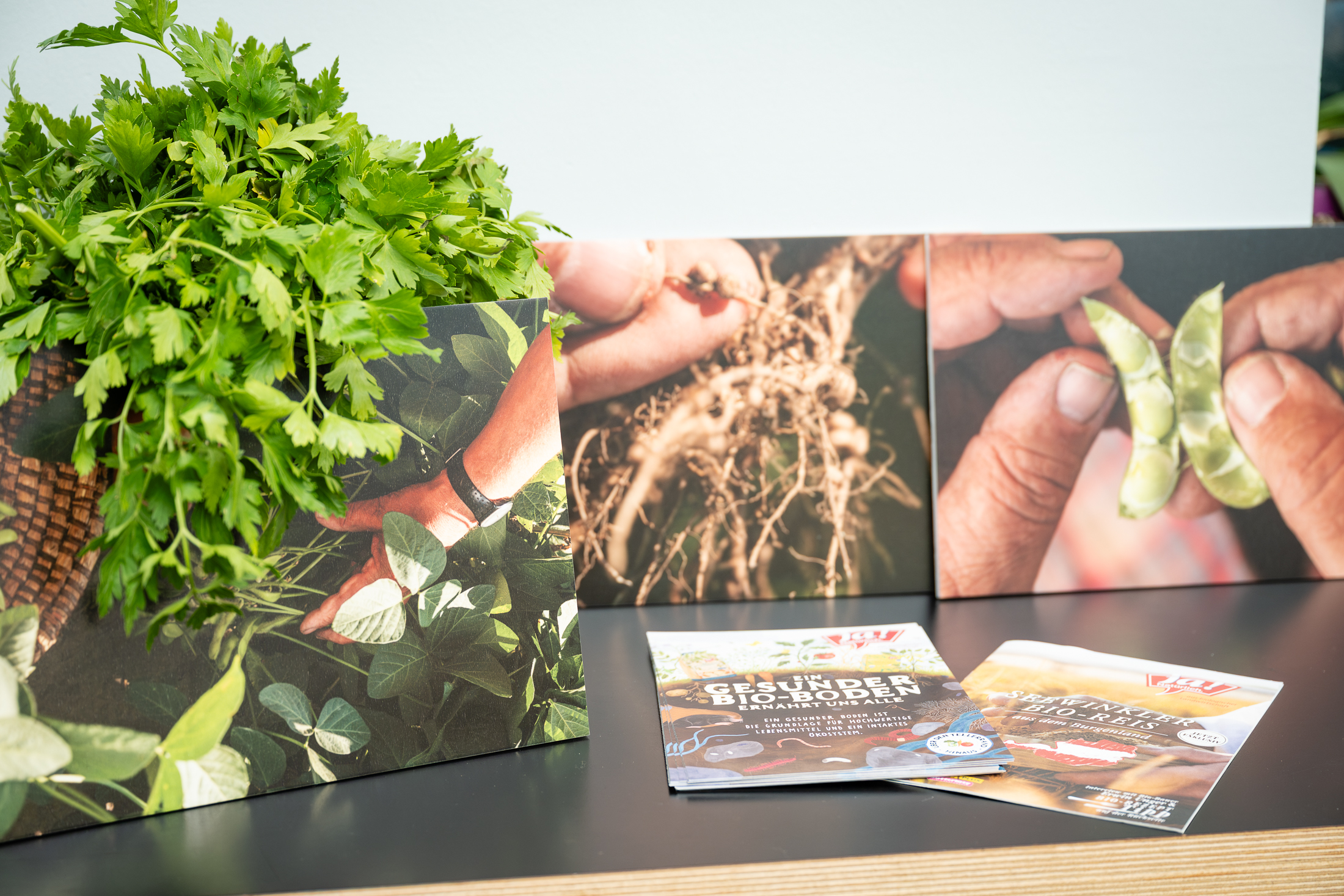
Plant-based proteins have become increasingly popular in recent years. More and more people are consciously cutting down on animal products and looking for high-quality alternatives that are both nutritious and tasty. This is exactly where Ja! Natürlich organic edamame from Austria comes in: they are high in protein, high in fibre, rich in nutrients and demonstrate that a modern, plant-based diet can also come from local organic farming.
“For me, edamame are a real hero product because they combine several key aspects that shape our diet today: regional organic origins and simple, versatile use in everyday life,” says Klaudia Atzmüller, Managing Director of Ja! Natürlich.
Good food comes from healthy soil
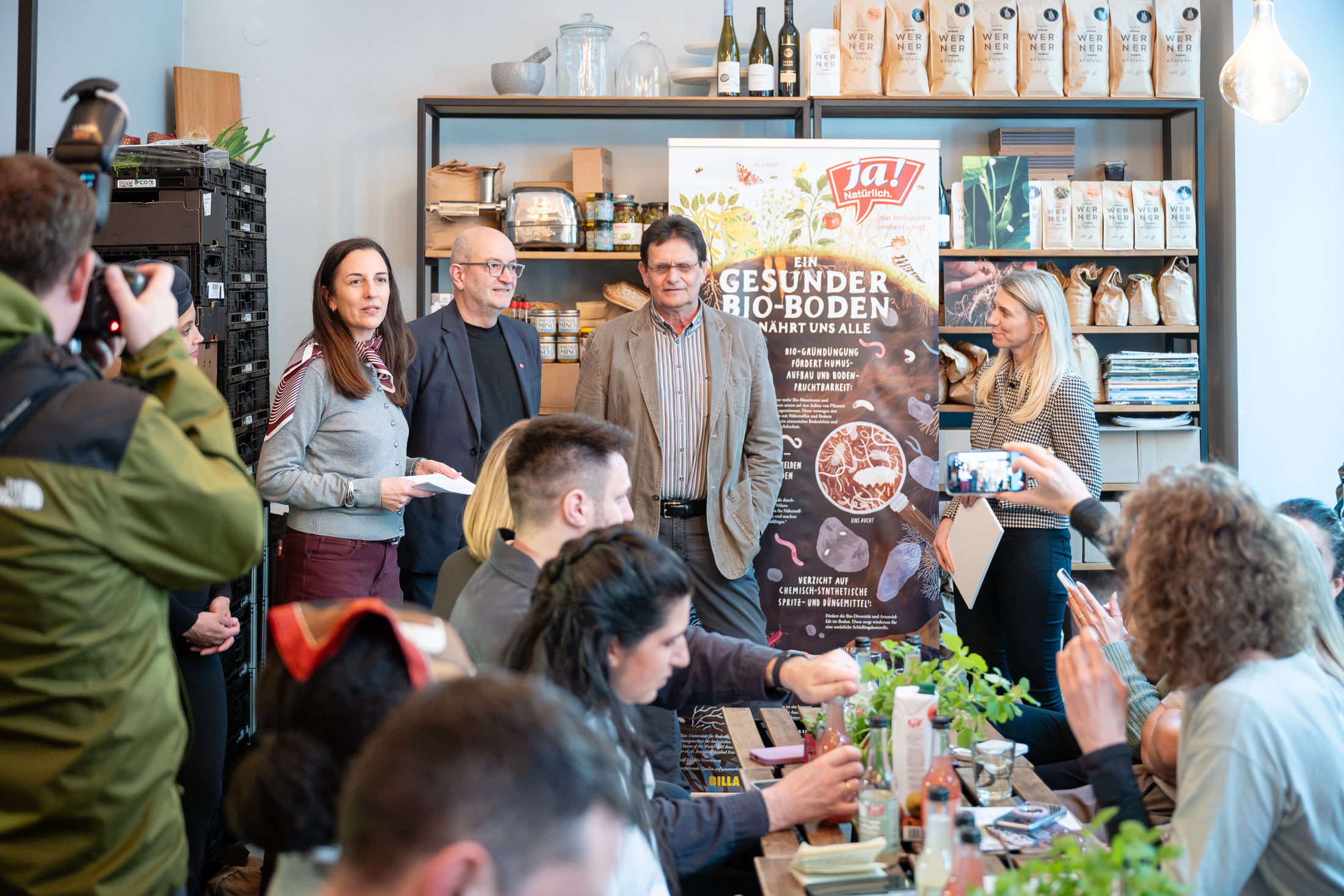
The media event therefore focused not only on the product, but above all on its origin: the soil. This is because healthy soil is the foundation of food quality, biodiversity and food security. It stores water, sequesters carbon and helps to mitigate the effects of the climate crisis, such as droughts and heavy rainfall. In organic farming in particular, building and maintaining fertile soil plays a key role.
“Soil health is one of the most important foundations for our food supply – today and in the future,” emphasises Andreas Steidl, Managing Director of Ja! Natürlich. “Organic farming operates in a cycle, promoting humus formation, crop rotation and diversity in the field. This makes soils more resilient and is crucial if we want to secure agriculture in the long term.”
Organic innovation from the Marchfeld
A look at the Breuer family farm in Lassee, in the Marchfeld, showed exactly how such innovations come about. The family has been farming there for around 350 years. Together with Ja! Natürlich, the producer is bringing Austrian organic edamame to the frozen food shelves.
“Many people still think of edamame as something exotic. But in fact, we’ve been experimenting with different varieties and growing methods for several years. And after a few setbacks, we’ve managed to grow edamame here in the Marchfeld. Edamame has now become a real passion for us; the Marchfeld offers the perfect conditions for it to thrive – though only very specific varieties that are harvested young and have that typical fresh, nutty flavour,” explains Günter Breuer, an organic farmer from the Marchfeld. “And it is precisely these varieties that thrive exceptionally well here in the Marchfeld. But for that to happen, everything really has to come together: loose, deep soil, optimal soil preparation, the right sowing time, targeted irrigation, intensive care and a great deal of finesse.” Cultivation remains demanding. Harvesting takes place only once a year, in late summer, and the ideal harvest window is extremely short. “Optimal ripeness often lasts just a few days. If you miss that moment, the perfect edamame season is already over,” says Breuer. “We sow around 150 kilograms of seed per hectare. In less than 90 days, this yields around 3,000 kilograms of edamame. Figuratively speaking, a football pitch yields around 2,500 kilograms – that’s roughly 9,800 packs for the frozen food aisle. But only if absolutely everything goes perfectly.”
Why the Marchfeld is so well suited
The fact that edamame can grow successfully in Austria at all is also down to the natural conditions of the Marchfeld. The region has long been regarded as an important vegetable-growing area and offers good conditions for specialist crops.
“The Marchfeld has deep, humus-rich soils that are very well suited to this crop. These soils are characterised by good water retention; and during prolonged dry spells, a large reservoir at the relatively high groundwater level is available for targeted irrigation,” explains Steidl. “Edamame is not only exciting from a culinary perspective, but also from an agronomic point of view. As a legume, the plant improves soil quality, as it contributes both to nitrogen enrichment and to soil aeration.”
Innovation is developed in collaboration with organic farmers
For Ja! Natürlich, edamame cultivation is a prime example of how innovation works in organic farming: not in isolation, but through close collaboration with long-standing partner farms. The Breuer farm has been supplying Ja! Natürlich with a variety of products for many years and is a prime example of the family-run farms with which new crops are developed jointly.
“Innovations in particular always arise in partnership with our farmers,” says Steidl. “Such partnerships make it possible to try out new things, share the risks of cultivation and incorporate innovations into the product range in the long term.”
Diversity in the soil, diversity on the plate
To round off the event, Ja! Natürlich drew a parallel between agriculture and nutrition. After all, diversity in the soil and diversity on the plate are closely linked. Healthy soil provides a habitat for countless microorganisms – and this diversity is also regarded as a key principle for human nutrition.
“Just as with the human gut microbiome, the same applies to the soil: the greater the diversity, the more stable the system,” says Atzmüller. “Diversity in the soil therefore also means diversity on our plates and, ultimately, diversity in the gut. A plant-rich and varied diet is preventive healthcare in action.”
Ja! Natürlich’s organic edamame from Austria clearly demonstrates how closely soil health, biodiversity, regional agriculture and a varied diet are interconnected, and how genuine protein power can be derived from local organic soil.