Two-thirds of those surveyed only use sun cream when they are going on holiday or taking part in outdoor leisure activities: 76% believe that sun protection is not necessary in everyday life, for example on the way to work or when running errands. Furthermore, 82% usually go without any protection at all on cloudy days, even though UV radiation is present regardless of the temperature or whether the sun is visible. Sun protection is recommended from a UV index of 3 onwards – a level that is regularly reached in Austria even in spring. Dermatologist Dr Erika Ivancic-Brandenberger says: “In my practice, I see every day that sun protection is associated with heat and holidays – yet temperature is dermatologically irrelevant. Even in spring, UV radiation reaches intensities that can lead to cumulative skin damage, even when the sky is cloudy. The UV index is the only decisive factor – and we should not underestimate the long-term consequences of excessive UV exposure: skin cancer is now one of the most common forms of cancer in Austria, and daily sun protection remains the most effective form of prevention. I therefore recommend sun protection all year round for particularly exposed areas such as the face, neck and scalp.”
Good sun protection doesn't have to be expensive
The study clearly shows that sunburn is not just a summer phenomenon. Around half of those surveyed suffer from (mild) sunburn at least once a year. 39 per cent experience it as early as spring – a sign that the risks are often underestimated at this time of year. People under 50 are particularly affected by this. For sun protection to be fully effective, it must be applied generously and reapplied consistently every two hours – yet only 27 per cent of those surveyed say they consistently reapply sun cream throughout the day.
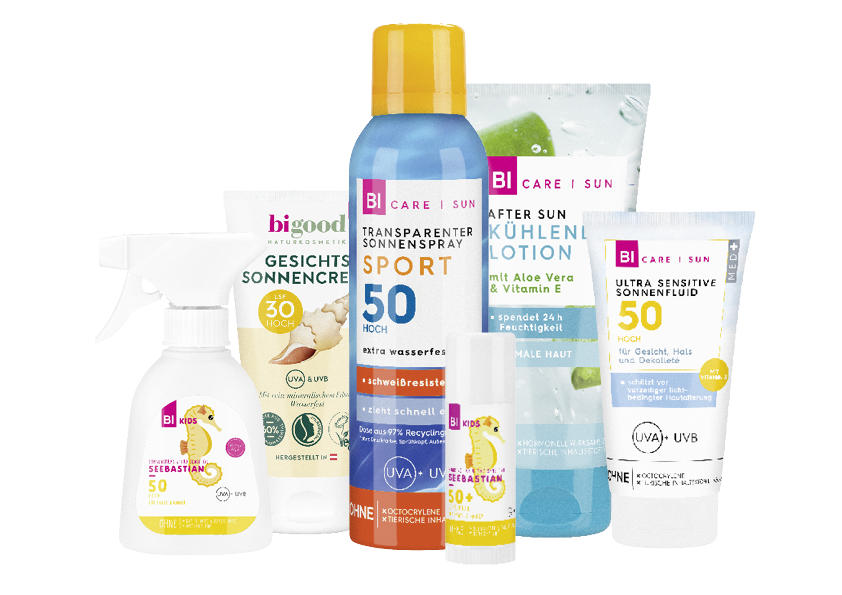
The good news: effective sun protection is not a question of price. Margit Reisinger, Managing Director of BIPA: “When developing our BIPA sun protection range, quality is our top priority. Our aim is to offer our customers products that provide reliable protection whilst remaining affordable for everyone. Because effective sun protection should not be a question of budget.” In the approximately 570 BIPA branches across Austria, as well as in the online shop, customers will find an extensive range of sun protection products, including our own brands BI CARE, bi good and BI KIDS for babies and children, as well as numerous other brands. “Whether for sensitive skin, children or quick protection on the go – at BIPA, everyone can find exactly what they need,” says Margit Reisinger.
Women take better precautions; people from Carinthia are the most likely to do so all year round
The results reveal clear differences between the sexes: whilst around one in six women use sun protection all year round, this applies to just under 7 per cent of men. People in Carinthia are particularly exemplary: just under 25 per cent use sun protection all year round – compared with only 7 per cent in Lower Austria and Burgenland. Just under half of women, but only a third of men, also state that they know their skin type precisely and choose the appropriate sun protection factor accordingly. Women generally place greater importance on skin-nourishing ingredients in sun protection products than men do (76% of women vs. 61% of men); furthermore, a white film when applying sun cream is out of the question for the vast majority of women (88%), whereas men are less bothered by this (67%). Nevertheless, almost one in two women fully or somewhat agree that sun protection is already an integral part of their daily skincare routine; among men, the figure is one in three.
The youngest age group is also striking: compared to others, teenagers place greater importance on sun protection for the face than for the rest of the body: 77 per cent of 14- to 19-year-olds agree completely or somewhat, whereas among 40- to 49-year-olds the figure is only 45 per cent. Nevertheless, they are the most likely to suffer at least one (mild) sunburn a year.
Protecting children in particular
92% of Austrians agree that children need special sun protection products with a higher sun protection factor. Dr Ivancic-Brandenberger: “Awareness is there – and that’s encouraging. Children’s skin is significantly more sensitive than adult skin and does not yet have the same natural protective mechanisms. Early sun damage in particular leaves lifelong marks. SPF 50+ is therefore not a recommendation for children, but a medical necessity.”
*About the study
For the study, a total of 1,000 people in Austria aged between 14 and 75 were surveyed in March and April 2026. The survey is representative of the Austrian population and was carried out by the online market research institute marketagent.